Flooded Basement: What to Do in the First Hour
The first hour is about keeping yourself safe and stopping more water from getting in, and everything else can wait for the right equipment.
October 6, 2026 · 4 min read
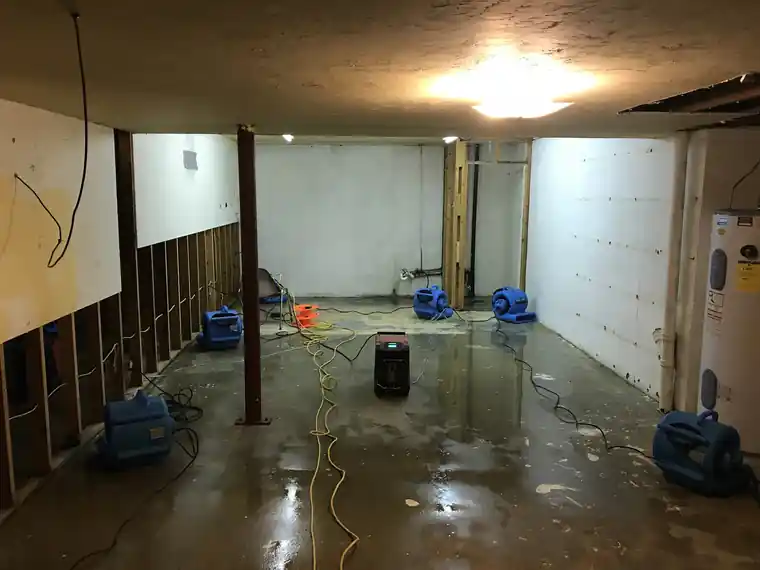
A flooded basement is an emergency, and it feels like one. Water spreads fast, it soaks into drywall and wood, and every hour it sits makes the cleanup bigger. The first hour comes down to two jobs: keep yourself safe, and stop more water from coming in.
Shut off the power and the gas first
Before anything else, shut off the power to the basement and shut off any gas. If you can reach your breaker panel without stepping in water, switch off the basement circuits, or the main breaker if you are not sure which circuits feed the space. If the panel itself is down in the wet basement, do not go down to reach it. Call your electric utility or an electrician instead.
The rule is simple: never walk into a flooded basement while the power is on. Electricity and standing water can seriously hurt you, and you will not see the danger until it is too late. Outlets, sump pump cords, a freezer, a furnace and a water heater can all put current into the water. If you smell gas, leave the house and call the gas company from outside.
If a storm caused it, wait, then dress for the job
When the flooding comes from a storm, wait until the storm has passed before you go inspect. Heavy rain and runoff can keep pushing water in while you stand there looking at it. Use that time to gather your gear and make your phone calls.
Once the power is off and it is safe to enter, protect yourself. Wear waterproof boots, rubber gloves and eye protection. Hip waders help if the water is deep. Floodwater can carry dirt and bacteria, and water from a sewer line or a backed-up drain is worse. Keep bare skin out of it, wash up well afterward, and keep kids and pets upstairs.
Find the source and stop it
Next, work out where the water is coming from. Nothing else you do will help much until the flow stops. If a pipe has burst or a fixture is leaking, turn off your water main. It is worth finding that shutoff before you ever need it, and showing everyone in the house where it is.
- Burst or leaking supply pipe: shut off the water main.
- Water heater or washing machine line: shut off the supply to that appliance, or the main if you cannot find it.
- Rain or groundwater seeping in: wait out the storm, then start getting the water out.
- Sewer or drain backup: stay out of the water and call for help.
If the water is coming in through a wall or floor from outside, you probably cannot stop it yourself. In that case the goal shifts to getting the water out quickly and keeping the damage as small as possible.
Get the water out, then get the belongings out
With the source under control, the water has to go. A sump pump can move a lot of it if you have one and it is safe to run. If you do not have one, call a restoration company as soon as you can. They bring pumps and extraction equipment that clear a basement far faster than buckets and towels, and they follow up with air movers and dehumidifiers to dry what is left.
While that is being arranged, move what you can out of the basement. Put it outdoors or in a well-ventilated room away from the main living space. A sunny spot outside is good for hard items. Cardboard boxes, paper and fabric hold water and grow mold quickly, so get them out and spread them in the open air. Let everything dry completely before you decide what to keep.
If the basement has carpet, it needs to come out as soon as you can manage it. The pad and the floor underneath stay wet long after the surface feels dry, and the floor cannot dry out while the carpet is sitting on top of it.
Before anything goes to the curb, photograph it. Take wide shots of the room, close shots of the waterline, and pictures of damaged belongings. If you plan to file a claim, call your insurance company early and ask what they need from you.
Check for mold after 48 hours
Mold can begin to grow in 48 hours or less when materials stay damp. Once the water is out and things have had time to dry, look closely. Check the bottom of the drywall, behind baseboards, the backs of stored boxes and the corners of the room. A musty smell or dark spots on a wall are signs to take seriously.
If you find mold, or you are not sure, have someone look at it. Complete Restoration & Construction inspects and assesses mold at no charge, any hour of the day, every day of the year. It is better to know what you have than to guess and paint over it.
Plenty of people can handle a few inches of clean water from a leaking line. A full basement, a sewer backup, or wet drywall and insulation is a bigger job. Wet building materials need to be dried to the bottom, not just to the touch, and that takes measuring tools and a lot of airflow.
If you are in Yakima, Zillah, Granger, Toppenish, Union Gap, Selah or anywhere else in the Yakima Valley and the water is already in, call Complete Restoration & Construction at (509) 388-1175. Someone answers around the clock, any day of the year.
Complete Restoration & Construction, LLC, (509) 388-1175
Call (509) 388-1175More articles
How to Document Water or Fire Damage for an Insurance Claim
The pictures you take before anything is moved or thrown away are the strongest record of what was lost.
Why Mold Comes Back After a DIY Cleanup
Mold comes back when the moisture is still there, the hidden growth was missed, or the cleanup spread spores around the house.