Why Mold Comes Back After a DIY Cleanup
Mold comes back when the moisture is still there, the hidden growth was missed, or the cleanup spread spores around the house.
October 6, 2026 · 4 min read
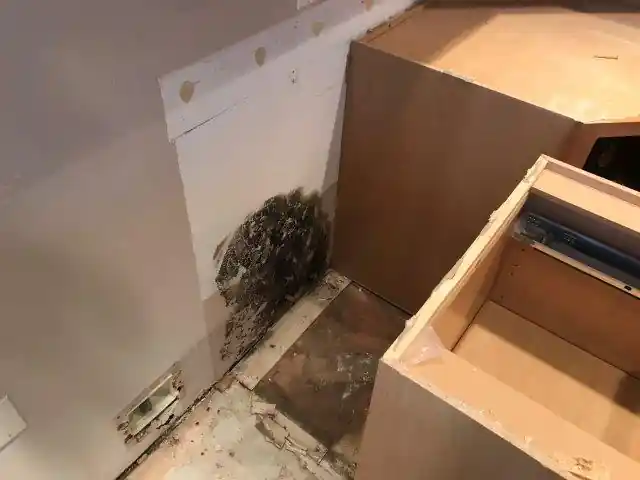
A dark patch shows up on a wall or under a sink. You scrub it, maybe spray it, maybe paint over it. It looks fine for a few weeks. Then it is back, sometimes bigger. This happens a lot, and it is rarely because you did the scrubbing wrong. It usually comes down to four things: the mold was not all visible, cleaning stirred it up, the area was never dried to the bottom, and the moisture source was still feeding it.
The mold you see is rarely all of it
Mold likes dark, damp, still spaces. That means the back of a cabinet, the inside of a wall cavity, the underside of carpet, and the space behind a baseboard. By the time a spot shows on the surface, there is often more growing out of sight. Restoration crews see this all the time: mold is often hidden, and it only becomes visible when the damaged material is pulled out.
Wiping the part you can see leaves the rest. A cleaned face with a growing back side is exactly how mold returns within weeks. Painting over it hides the stain, but paint is not a fix for what is underneath. If the material is still damp behind the paint, the growth just continues.
Cleaning can spread the problem
Mold reproduces by releasing spores, and those spores are tiny and light. When you scrub, scrape or brush a moldy surface, you can knock a cloud of them into the air. Running a fan, opening a door or carrying a moldy board through the house moves them to other rooms. Some of those spores land on damp surfaces and begin to grow.
That is why a small DIY job sometimes turns a single spot into three. Mold can irritate people with allergies or asthma, so stirring it up in a home you live in is worth avoiding. If the patch is more than a small surface spot, or you suspect it goes behind the wall, it is a good time to stop and have someone look.
A proper removal is built around keeping the mold where it is. Professionals seal off the work area with plastic, control the airflow, and use equipment to filter the air while they work, so the removal does not carry spores into the rest of the building. The goal is a process that prevents cross-contamination and keeps the people in the building safe.
Sheeting, lay-flat ducting and air scrubbers running are not extra for the sake of it. They are the reason the cleanup does not create a new problem in the next room.
Dry to the bottom, not just to the touch
Mold needs moisture. If the wood, drywall or subfloor is still holding water, mold will grow again no matter how clean the surface looks. Building materials can feel dry on the surface while they are still wet deeper in, especially along the bottom of a wall where water collects, and under flooring where air does not reach.
Real drying uses air movers to push air across the surface and dehumidifiers to pull moisture out of the air. It also uses a plan: which materials can dry in place, which need to be cut out, and when to check them again. A box fan and an open window will not do the same job.
Find and fix the moisture source
Every mold problem has a water story. A slow pipe leak, a roof leak, a window that sweats, a bathroom with no working fan, or a flood that was never fully dried. If you remove the mold and leave the source, you have only reset the clock.
- Check under sinks and around toilets for slow drips.
- Look at ceilings below bathrooms and roof edges for stains that grow after rain.
- Check the basement or crawl space walls for dampness after storms.
- Make sure bathroom and kitchen fans actually vent to the outside.
- Remember any past flood or leak that was dried by hand.
Timing matters too. Mold can begin to grow in 48 hours or less on wet materials. That window is short, which is why quick water removal matters so much after a leak or flood. The sooner the building is extracted and drying, the smaller the chance that mold gets a start in the first place.
If it has been longer than that and the material is still wet or smells musty, assume mold may already be present. Take photos, keep the area closed off, and avoid disturbing it until someone has looked.
A good remediation starts with an inspection to find out how far the mold goes and why it is there. Then comes containment, careful removal of the materials that cannot be saved, cleaning of what can, and drying to confirm the building is actually dry. Only after that does anyone rebuild what was removed.
Complete Restoration & Construction inspects and assesses mold at no charge, 24/7/365. If you have a spot that keeps returning, or you want a second opinion before you scrub again, call (509) 388-1175 and describe what you are seeing.
Complete Restoration & Construction, LLC, (509) 388-1175
Call (509) 388-1175More articles
Flooded Basement: What to Do in the First Hour
The first hour is about keeping yourself safe and stopping more water from getting in, and everything else can wait for the right equipment.
How to Document Water or Fire Damage for an Insurance Claim
The pictures you take before anything is moved or thrown away are the strongest record of what was lost.